Abstract
Acute atrial fibrillation in type 2 myocardial infarction: A national analysis of incidence and in-hospital outcomes
Ben Thiravetyan MD, Napat Suriyathumrongkul MD, Sireethorn Wonghanchai MD, Varote Shotelersuk MD, Nisha Wanichwecharungruang MD, Nattanicha Chaisrimaneepan MD, Panat Yanpiset MD, Chanokporn Puchongmart MD
Corresponding author: Chanokporn Puchongmart
Contact Information: Chanokporn.Puchongmart@ttuhsc.edu
DOI: 10.12746/swjm.v14i61.1627
ABSTRACT
Background: Atrial fibrillation (AF) is the most common sustained cardiac arrhythmia linked to worse outcomes. However, data on AF in type 2 myocardial infarction (T2MI), characterized by oxygen supply-demand mismatch without coronary occlusion, are limited.
Objective: To evaluate the incidence of acute AF in patients hospitalized with T2MI and its association with in-hospital outcomes.
Methods: We conducted a retrospective cohort study using the National Inpatient Sample from 2017 to 2022. Adult patients hospitalized with T2MI were included, excluding those with chronic AF. The primary outcome was the incidence of acute AF. Secondary outcomes were in-hospital mortality, cardiogenic shock, acute kidney injury (AKI), and bleeding. Survey-weighted analyses and multivariable logistic regression were used to calculate adjusted odds ratios.
Results: Among patients with T2MI, acute AF occurred in 31.3%. Patients with AF were older and had more comorbidities. In-hospital mortality, cardiogenic shock, and AKI were higher in the AF group compared to non-AF group. After adjustment, acute AF was independently associated with in-hospital mortality (aOR 1.17, 95% CI: 1.14–1.20) and cardiogenic shock (aOR 1.46, 95% CI: 1.40–1.51).
Conclusions: Acute AF is common in T2MI hospitalizations and is associated with mortality and cardiogenic shock.
Keywords: Atrial fibrillation, myocardial infarction, type 2 myocardial infarction, demand ischemia
INTRODUCTION
Atrial fibrillation (AF) is the most common sustained cardiac arrhythmia with an increasing prevalence worldwide.1 It is associated with a substantial morbidity burden, leading to more frequent hospitalizations and emergency department visits compared to individuals without the condition, and has been shown to increase total healthcare costs by up to 2.2-fold.2,3 The etiology of AF is multifactorial. Pathophysiologic contributors include activation of the renin-angiotensin-aldosterone system, hypoxia, mitochondrial dysfunction, and autonomic imbalance.1 These processes are often driven by chronic comorbidities such as hypertension, coronary artery disease, obesity, alcohol use, and sleep-disordered breathing. In addition, acute systemic stressors—including infections, major surgeries, or myocardial infarction (MI)—can precipitate the onset or unmasking of AF.1,4,5 It is crucial to identify AF in this high-risk population, as timely recognition and management can reduce the risk of thromboembolic events.6
Type 2 myocardial infarction (T2MI) is defined as myocardial ischemia resulting from an imbalance between oxygen supply and demand without acute coronary obstruction.7 Prior studies have demonstrated that acute AF commonly co-occurs with type 1 myocardial infarction (T1MI), with a significant increase in in-hospital mortality and adverse cardiovascular events.5 However, despite the rising prevalence of T2MI, the relationship between T2MI and acute AF remains poorly characterized. In particular, the prevalence of acute AF in patients with T2MI and its impact on in-hospital outcomes such as mortality and complications have not been well studied. Understanding the intersection of acute AF and T2MI is critical, as these patients often present with multiple comorbidities and complex clinical trajectories. This study aims to characterize the incidence of acute AF among patients hospitalized with T2MI and to evaluate the association between acute AF and in-hospital outcomes, including mortality, cardiogenic shock, acute kidney injury (AKI), and bleeding complications.
METHOD
We conducted a retrospective cohort study using the National Inpatient Sample (NIS) from 2017 to 2022. The NIS, part of the Healthcare Cost and Utilization Project (HCUP), is the largest publicly available all-payer inpatient database in the United States, providing a 20% stratified sample of discharges from U.S. community hospitals. We included adult patients aged ≥18 years who were hospitalized with a principal or secondary diagnosis of T2MI, identified using the International Classification of Diseases, Tenth Revision, Clinical Modification (ICD-10-CM) diagnosis code I21.A1, type 2 myocardial infarction. Patients with a history of chronic atrial fibrillation and those with missing data for key variables, e.g., age, sex, mortality, and race, were excluded.
The primary exposure was a diagnosis of acute AF, defined as the presence of ICD-10-CM codes: I479, Paroxysmal tachycardia, unspecified; I480, Paroxysmal atrial fibrillation; I481, Persistent atrial fibrillation; I4811, Longstanding persistent atrial fibrillation; I4819, Other persistent atrial fibrillation; I4821, Permanent atrial fibrillation; I483, Typical atrial flutter; I484, Atypical atrial flutter; I4891, Unspecified atrial fibrillation, and I4892, unspecified atrial flutter.
Covariates, including age, sex, race, comorbidity burden, and diagnoses of potential causes of myocardial injury, were collected. Comorbidities were measured using individual Elixhauser comorbidity flags defined by HCUP software.
OUTCOMES
The primary outcome was the incidence of acute AF among patients hospitalized with T2MI. Secondary outcomes included in-hospital mortality, cardiogenic shock, AKI, and bleeding complications.
STATISTICAL ANALYSIS
We applied survey weights, stratification, and clustering to all analyses to generate national estimates per HCUP guidelines. Descriptive statistics summarized baseline characteristics between T2MI patients with and without acute AF. Continuous variables were reported as means ± standard deviations. Categorical variables were summarized as weighted percentages. Characteristics between patients with and without acute AF were compared using design-based F tests from a survey-adjusted chi-square test. Continuous variables were reported as means with standard deviations or medians with interquartile ranges and compared using survey-weighted linear regression as appropriate. Multivariable logistic regression was used to estimate the adjusted odds ratio (aOR) and confidence interval (CI) for in-hospital mortality and cardiogenic shock associated with acute AF. A two-sided p-value <0.05 was considered statistically significant. All analyses were performed using Stata version 18.0 (StataCorp, College Station, TX).
RESULTS
A total of 2,016,429 hospitalized patients were included for analysis. Of these, 31.1% developed acute AF. Baseline demographic characteristics are summarized in Table 1. Patients with acute AF were older (77 vs. 70 years, p < 0.01) and were less likely to be female (45.1% vs. 47.9%, p < 0.01). Significant differences in racial distribution were observed. White patients comprised the majority in the acute AF group (75.9% vs. 63.8%). Black and Hispanic patients were more prevalent in the non-acute AF group (12.0% vs. 19.5% and 6.7% vs. 10.2%, respectively).
Table 1. Baseline Characteristics of T2MI Patients with and Without Acute AF
| Characteristics |
Acute AF
(N = 630,869) |
No Acute AF
(N = 1,385,560) |
p-value |
| Incidence, % |
31.3 |
68.7 |
|
| Age, year (IQR) |
77 (68, 85) |
70 (59,80) |
<0.01 |
| Female, % |
45.1 |
47.9 |
<0.01 |
| Race, % |
|
|
<0.01 |
| White |
75.9 |
63.8 |
|
| Black |
12.0 |
19.5 |
|
| Hispanic |
6.7 |
10.2 |
|
| Asian or Pacific islander |
2.6 |
2.8 |
|
| Native American |
0.5 |
0.9 |
|
| Others |
2.2 |
2.8 |
|
| Comorbidities, % |
| Hypertension |
86.4 |
80.0 |
<0.01 |
| Diabetes Mellitus |
41.0 |
41.9 |
<0.01 |
| Congestive Heart Failure |
68.5 |
52.9 |
<0.01 |
| Valvular Heart Disease |
25.5 |
15.9 |
<0.01 |
| Peripheral Vascular Disease |
15.4 |
11.2 |
<0.01 |
| Pulmonary Circulation Disorder |
17.7 |
14.6 |
<0.01 |
| Chronic Kidney Disease |
44.2 |
38.3 |
<0.01 |
| Fluid and Electrolytes Disorder |
56.6 |
58.2 |
<0.01 |
| Liver Disease |
8.4 |
10.0 |
<0.01 |
| Obesity |
18.8 |
19.3 |
<0.01 |
| Hypothyroidism |
18.3 |
14.4 |
<0.01 |
| Cancer |
7.9 |
8.3 |
<0.01 |
| Drug Abuse |
3.7 |
8.3 |
<0.01 |
| Alcohol Abuse |
4.4 |
6.2 |
<0.01 |
| Causes of T2MI, % |
| Respiratory Failure |
43.6 |
44.2 |
<0.01 |
| Hypotension or shock |
16.8 |
15.9 |
<0.01 |
| Anemia |
8.9 |
8.6 |
<0.01 |
The acute AF group exhibits a greater co-morbidity burden, including hypertension (86.4% vs. 80.0%, p < 0.01), congestive heart failure (68.5% vs. 52.9%, p < 0.01), chronic kidney disease (44.2% vs. 38.3%, p < 0.01), valvular heart disease (25.5% vs. 15.9%, p < 0.01), peripheral vascular disease (15.4% vs. 11.2%, p < 0.01), pulmonary circulation disorder (17.7% vs. 14.6%, p < 0.01) and hypothyroidism (18.3% vs. 14.4%, p < 0.01). In contrast, comorbidities such as diabetes, fluid and electrolyte disorders, obesity, liver disease, cancer, drug abuse, and alcohol abuse were observed to be lower in the acute AF group.
Per T2MI etiology, there are slight differences between the acute AF and non-acute AF groups as follows: respiratory failure (43.6% vs. 44.2%, p < 0.01); hypotension or shock (16.8% vs. 15.9%, p < 0.01), and anemia (8.9% vs. 8.6%, p < 0.01).
In the unadjusted analysis, in-hospital mortality was higher in the acute AF group (10.9% vs. 9.3%, p < 0.01) as illustrated in Table 2 and Figure 1. Other secondary outcomes were also found to be significantly greater: cardiogenic shock (4.3% vs. 2.9%, p < 0.01) and AKI (47.5 vs. 45.6%, p < 0.01), while there is no significant difference in bleeding complication among the two groups (12.8% vs. 12.7%, p = 0.14).
Table 2. Unadjusted Outcomes Among Patients with and Without Acute AF
| Outcomes |
Acute AF (N = 630,869) |
No Acute AF (N = 1,385,560) |
p-value |
| In-hospital Mortality, % |
10.9 |
9.3 |
<0.01 |
| Cardiogenic Shock, % |
4.3 |
2.9 |
<0.01 |
| Acute Kidney Injury, % |
47.5 |
45.6 |
<0.01 |
| Bleeding Complication, % |
12.8 |
12.7 |
0.14 |
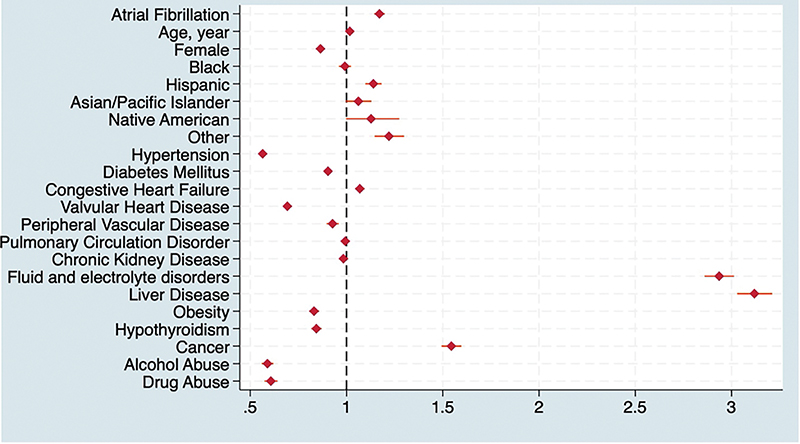
Figure 1. Adjusted odds ratio for in-hospital mortality in patients with type 2 myocardial infarction.
After adjusting for confounders, acute AF demonstrates an independent predictor for mortality and cardiogenic shock (aOR 1.17, 95% CI: 1.14–1.20) and (aOR 1.46, 95% CI: 1.40–1.51), respectively, as shown in Table 3 and Figure 2. Other predictors associated with increased mortality were older age (aOR 1.02, 95% CI: 1.02–1.02), Hispanic (aOR 1.14, 95% CI: 1.10–1.19), congestive heart failure (aOR 1.06, 95% CI: 1.03–1.08), pulmonary circulation disorder (aOR 1.17, 95% CI: 1.13–1.20) and cancer (aOR 1.54, 95% CI: 1.49–1.59). Interestingly, fluid and electrolyte disorders and liver disease demonstrated strong associations with in-hospital mortality (aOR 2.94, 95% CI: 2.86–3.03) and (aOR 3.11, 95% CI: 3.01–3.21), respectively and in cardiogenic shock (aOR 2.87, 95% CI: 2.73–3.00) and (aOR 3.50, 95% CI: 3.35–3.66), respectively.
Table 3. Adjusted In-Hospital Outcomes Associated with and Without Acute AF
| Predictors |
In-hospital Mortality (aOR, 95% CI) |
p-value |
Cardiogenic Shock (aOR, 95% CI) |
p-value |
| Acute AF |
1.17 (1.14–1.20) |
<0.01 |
1.46 (1.40–1.51) |
<0.01 |
| Age, year |
1.02 (1.02–1.02) |
<0.01 |
0.98 (0.98–0.99) |
<0.01 |
| Female |
0.86 (0.84–0.88) |
<0.01 |
0.84 (0.80–0.87) |
<0.01 |
| Race |
| Black |
0.99 (0.95–1.02) |
0.42 |
1.00 (0.95–1.06) |
0.91 |
| Hispanic |
1.14 (1.10–1.19) |
<0.01 |
0.99 (0.93–1.06) |
0.87 |
| Asian or Pacific islander |
1.06 (1.00–1.13) |
0.06 |
1.20 (1.08–1.32) |
<0.01 |
| Native American |
1.13 (0.98–1.30) |
0.08 |
0.93 (0.77–1.14) |
0.49 |
| Others |
1.22 (1.14–1.31) |
<0.01 |
1.20 (1.08–1.33) |
<0.01 |
| Comorbidities |
| Hypertension |
0.57 (0.55–0.58) |
<0.01 |
0.64 (0.61–0.67) |
<0.01 |
| Diabetes Mellitus |
0.91 (0.86–0.93) |
<0.01 |
0.94 (0.91–0.98) |
<0.01 |
| Congestive Heart Failure |
1.06 (1.03–1.08) |
<0.01 |
4.32 (4.10–4.55) |
<0.01 |
| Valvular Heart Disease |
0.68 (0.66–0.71) |
<0.01 |
1.23 (1.21–1.32) |
<0.01 |
| Peripheral Vascular Disease |
0.93 (0.90–0.96) |
<0.01 |
1.14 (1.08–1.19) |
<0.01 |
| Pulmonary Circulation Disorder |
1.17 (1.13–1.20) |
<0.01 |
1.44 (1.38–1.51) |
<0.01 |
| Chronic Kidney Disease |
0.98 (0.96–1.01) |
0.21 |
0.91 (0.88–0.95) |
<0.01 |
| Fluid and Electrolytes Disorder |
2.94 (2.86–3.03) |
<0.01 |
2.87 (2.73–3.00) |
<0.01 |
| Liver Disease |
3.11 (3.01–3.21) |
<0.01 |
3.50 (3.35–3.66) |
<0.01 |
| Obesity |
0.83 (0.82–0.87) |
<0.01 |
0.73 (0.70–0.77) |
<0.01 |
| Hypothyroidism |
0.84 (0.80–0.87) |
<0.01 |
0.86 (0.81–0.91) |
<0.01 |
| Cancer |
1.54 (1.49–1.59) |
<0.01 |
0.92 (0.86–0.99) |
0.02 |
| Drug Abuse |
0.61 (0.58–0.64) |
<0.01 |
0.86 (0.81–0.92) |
<0.01 |
| Alcohol Abuse |
0.59 (0.58–0.64) |
<0.01 |
0.67 (0.63–0.74) |
<0.01 |
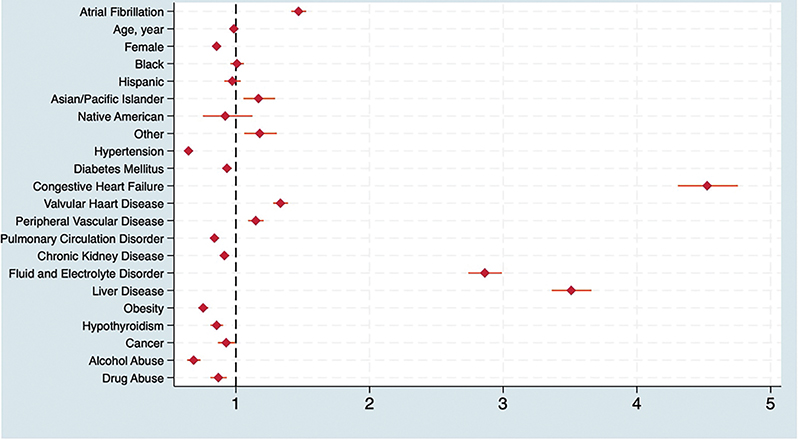
Figure 2. Adjusted odds ratio for cardiogenic shock in patients with type 2 myocardial infarction.
DISCUSSION
This study is the first nationally representative analysis examining the association between T2MI and acute AF. In our study, the incidence of acute AF among patients hospitalized with T2MI was 31.3%. We report a significantly higher incidence proportion of acute AF compared to prior studies in T1MI: 5.8–9% in ST-segment elevation MI and 7.7% in non-ST-segment elevation MI.8–10 This discrepancy may reflect inaccuracies in coding for acute AF, which might include patients with chronic atrial fibrillation. Additionally, T2MI itself is often prone to misclassification, as reported by McCarthy et al. and Saleh et al.11,12
In our cohort, the mean age of patients with acute AF was 77 years, approximately 7 years older than that of patients without acute AF. This is consistent with the review by Belkouche et al., which noted that in T2MI, AF predominantly occurs in older patients, typically in their 70s.13 This may also reflect the natural progression of AF to more persistent forms at a mean age of 70 years, often accompanied by a greater burden of comorbidities.14
Atrial fibrillation has been identified as a predictor of in-hospital mortality and increased hospital burdens, especially in the non-extreme age population.15,16 After age 75, AF was found to be no longer associated with an increased in-hospital mortality.17 However, our analysis revealed a weak association between acute AF and in-hospital mortality. This weak association may be attributable to the advanced age of our study population. A moderate to strong association between acute AF and in-hospital mortality was observed among patients with fluid and electrolyte disorders and liver disease. This finding is consistent with prior studies that have demonstrated similar associations in T1MI and critically ill patients.18,19
Another notable finding is that acute AF was weakly to moderately associated with cardiogenic shock in our cohort. This contrasts with the study by Feistritzer et al., which reported that AF was not a risk factor for cardiogenic shock in patients with T1MI.20 These observations underscore the need for further risk stratification to identify patients within this population who may be at a higher risk of developing cardiogenic shock.
Our findings highlight the complex interplay between acute AF and outcomes in patients with T2MI. Given the predominantly older age of our cohort, age-stratified analyses may help determine whether a stronger association exists in younger patients. Future studies are warranted to further characterize these relationships and to guide more tailored risk stratification and management strategies in this unique population.
LIMITATIONS
This study has several limitations. First, it relies on administrative data from the NIS, which is subject to coding errors and misclassification, and accurately captures acute AF. Second, the use of ICD-10-CM codes does not allow confirmation of clinical diagnoses through chart review or biomarkers, nor does it provide information on AF chronicity beyond our exclusion of known chronic AF cases. Third, the NIS lacks granular clinical data, such as the severity of cases, do-not-resuscitate status, intensive care unit admission, or treatment protocol, which may influence both the incidence of AF and clinical outcomes. Fourth, because the NIS is a hospitalization-level dataset, repeat admissions of the same patient may have been counted multiple times. Finally, the observational nature of this study precludes establishing causality between AF and adverse outcomes in T2MI.
CONCLUSIONS
Acute AF occurred in 31.3% of T2MI patients. It demonstrated a weak association with in-hospital mortality and a weak to moderate association with cardiogenic shock. These findings highlight the need for further age-stratified studies to identify higher-risk subgroups.
REFERENCES
- Joglar JA, Chung MK, Armbruster AL, et al. 2023 ACC/AHA/ACCP/HRS Guideline for the Diagnosis and Management of Atrial Fibrillation: A Report of the American College of Cardiology/American Heart Association Joint Committee on Clinical Practice Guidelines. Circulation. 2024;149(1):e1–e156. DOI: 10.1161/CIR.0000000000001193.
- Deshmukh A, Iglesias M, Khanna R, et al. Healthcare utilization and costs associated with a diagnosis of incident atrial fibrillation. Heart Rhythm O2. 2022;3(5):577–86. (In eng). DOI: 10.1016/j.hroo.2022.07.010.
- Tsao CW, Aday AW, Almarzooq ZI, et al. Heart Disease and Stroke Statistics-2023 Update: A Report From the American Heart Association. Circulation 2023;147(8):e93–e621. (In eng). DOI: 10.1161/cir.0000000000001123.
- AlTurki A, Marafi M, Proietti R, et al. Major Adverse Cardiovascular Events Associated With Postoperative Atrial Fibrillation After Noncardiac Surgery: A Systematic Review and Meta-Analysis. Circ Arrhythm Electrophysiol. 2020;13(1):e007437. DOI: 10.1161/CIRCEP.119.007437.
- Jabre P, Roger VL, Murad MH, et al. Mortality associated with atrial fibrillation in patients with myocardial infarction: a systematic review and meta-analysis. Circulation. 2011;123(15):1587–93. (In eng). DOI: 10.1161/circulationaha.110.986661.
- Dewar RI, Lip GY. Identification, diagnosis and assessment of atrial fibrillation. Heart. 2007;93(1):25–8. (In eng). DOI: 10.1136/hrt.2006.099861.
- Raphael CE, Roger VL, Sandoval Y, et al. Incidence, Trends, and Outcomes of Type 2 Myocardial Infarction in a Community Cohort. Circulation. 2020;141(6):454–63. (In eng). DOI: 10.1161/circulationaha.119.043100.
- Congo KH, Belo A, Carvalho J, et al. New-Onset Atrial Fibrillation in St-Segment Elevation Myocardial Infarction: Predictors and Impact on Therapy And Mortality. Arq Bras Cardiol. 2019;113(5):948–57. (In eng por). DOI: 10.5935/abc.20190190.
- Yang W-Y, Lip GYH, Sun Z-J, et al. Implications of new-onset atrial fibrillation on in-hospital and long-term prognosis of patients with acute myocardial infarction: A report from the CBD bank study. Front Cardiovasc Med. 2022;9:979546. (Original Research) (In English). DOI: 10.3389/fcvm.2022.979546.
- Laurent G, Zeller M, Dentan G, et al. Prognostic impact of new onset atrial fibrillation in acute non-ST elevation myocardial infarction data from the RICO survey. Heart. 2005;91(3):369–30. (In eng). DOI: 10.1136/hrt.2003.028035.
- McCarthy C, Murphy S, Cohen JA, et al. Misclassification of Myocardial Injury as Myocardial Infarction: Implications for Assessing Outcomes in Value-Based Programs. JAMA Cardiology. 2019;4(5):460–4. DOI: 10.1001/jamacardio.2019.0716.
- Saleh MA, Ambrose JA, Poosti K, et al. Misdiagnosis of Type II Myocardial Infarction. J Am Coll Cardiol. 2019;74(13):1732–3. (In eng). DOI: 10.1016/j.jacc.2019.07.052.
- Belkouche A, Yao H, Putot A, et al. The Multifaceted Interplay between Atrial Fibrillation and Myocardial Infarction: A Review. J Clin Med. 2021;10(2). (In eng). DOI: 10.3390/jcm10020198.
- Wasmer K, Eckardt L, Breithardt G. Predisposing factors for atrial fibrillation in the elderly. J Geriatr Cardiol. 2017;14(3):179–84. (In eng). DOI: 10.11909/j.issn.1671-5411.2017.03.010.
- Mountantonakis SE, Saleh M, Fishbein J, et al. Atrial fibrillation is an independent predictor for in-hospital mortality in patients admitted with SARS-CoV-2 infection. Heart Rhythm. 2021;18(4):501–7. (In eng). DOI: 10.1016/j.hrthm.2021.01.018.
- Rivero-Ayerza M, Scholte Op Reimer W, Lenzen M, et al. New-onset atrial fibrillation is an independent predictor of in-hospital mortality in hospitalized heart failure patients: results of the EuroHeart Failure Survey. Eur Heart J. 2008;29(13):1618–24. DOI: 10.1093/eurheartj/ehn217.
- de Terwangne C, Lelubre C, Hanotier P, et al. Prevalence and Impact of Atrial Fibrillation on Intra-Hospital Mortality in Patients Aged ≥75 Years. The American Journal of Cardiology. 2022;177:40–7. DOI: 10.1016/j.amjcard.2022.04.050.
- Kumar M, Nso N, Khlidj Y, et al. Management and outcomes of patients with ST-elevation myocardial infarction and liver disease-Insights from the Nationwide Readmissions Database. Am Heart J Plus. 2025;52:100516. (In eng). DOI: 10.1016/j.ahjo.2025.100516.
- Lee JW. Fluid and electrolyte disturbances in critically ill patients. Electrolyte Blood Press. 2010;8(2):72–81. (In eng). DOI: 10.5049/ebp.2010.8.2.72.
- Feistritzer H-J, Desch S, Zeymer U, et al. Prognostic Impact of Atrial Fibrillation in Acute Myocardial Infarction and Cardiogenic Shock. Circ Cardiovasc Interv. 2019;12(6):e007661. DOI: 10.1161/CIRCINTERVENTIONS.118.007661.
Article citation: Thiravetyan B, Suriyathumrongkul N, Wonghanchai S, Shotelersuk V, Wanichwecharungruang N, Chaisrimaneepan N, Yanpiset P. Acute atrial fibrillation in Type 2 Myocardial Infarction: A national analysis of incidence and in-hospital outcomes. 2026;14(61):36–43
From: Department of Internal Medicine, Texas Tech University Health Sciences Center, Lubbock, TX (BT, NS, VS, NW, NC, PY, CP) Department of Family Medicine, Chakri Naruebodindra Medical Institute, Ramathibodi Hospital, Mahidol University, Samut Prakan, Thailand
Conflicts of interest: none
This work is licensed under a Creative Commons Attribution-ShareAlike 4.0 International License.